This page written circa 27 September, 2026.
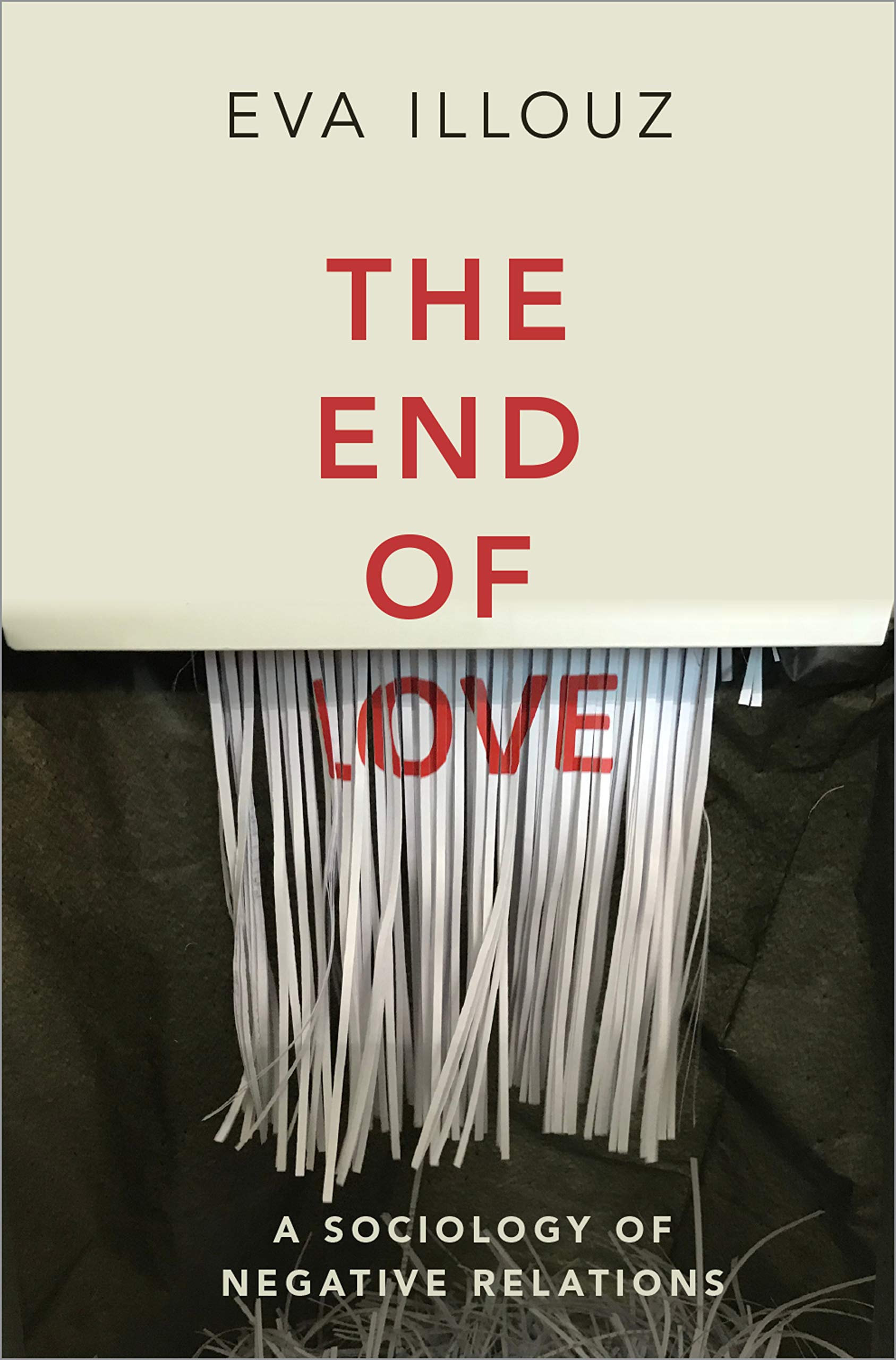
Eva Illouz's book is the most erudite, dense, and academic tome on relationships that I have encountered. I have always respected books that forced me to go and look up words, and this one scores record marks in that area. From anomie and monads to telos by way of hermeneutics, I find myself searching for words I need to discover or clarify... thank goodness I previously encountered ontology and epistemology and have a passable idea of what they mean. Half way through the book I am still grasping how norms, experience, ontology, values, procedures, and emotions influence the decision making around relationships; at the end I think I understand 'scopic capitalism'.
Meanwhile I binge The Other Bennet Sister. This series tells the story of Mary, the middle of the five sisters in Pride and Prejudice whose romantic trajectory was non-existent in Austen's book. The story is well constructed, and every bit as feminist and sensible as Austen might have hoped.
The End of Love
is overflowing with fascinating facts and informative vignettes.
Have you heard of the 1932 study of propinquity in marriage selection that found
60% of marriages occurred between people who lived within 20 blocks of each other,
and 30% within 5 blocks? (Propinquity is here used in its geographical sense,
'residential propinquity'.)
It is not hard to accept that in 1930s America connections were heavily influenced by
sheer convenience; modern dating apps ask for a range, although I would prefer to
specify the range in transit time rather than linear distance... next revision, I expect.
Look out for a 'propinquity' button.
Illouz examines divorce too,
reporting that in the 1940s cited reasons for divorce were objective, such as alcoholism or neglect,
but from the 1970s onward the cited reasons were 'more abstract and affective', such as
"growing apart", "becoming more distant", or "feeling unloved"... emotional things.
The Australian sexologist Bettina Arndt observed more recently that
over 50% of marriage failures were associated with sexual issues.
I now understand that the lack of sexual desire is a symptom, not a root cause,
though the root cause is not necessarily an issue with the spouse.
(In fact, Illouz's analysis of divorce is very insightful.)
Illouz' book goes a long way to explaining the psychological theory behind empirically-observed things that set what goes on inside swipe left/right dating apps. It does this in rigorous, jargonised, psychological detail.
In the time of Austen, one stated intentions up front. In extremis, one might present one's card
to a prospect's father and seek permission to court. Today, one is most likely to hook up,
and discuss possible destinations down the track; one source suggests 3 months down the track.
Illouz presents a couple of contemporary (2018) scenarios. After sleeping together four times, Alison
seeks some clarification from Henry as to their relationship, and he responds
"I don't know. I hadn't thought about it. I did not know it needed a name."
He settles on "a bit of fun", considered to lie somewhere between "just a fuck" and a "relationship".
In another scenario, a group of girls try to determine if a drink with a certain fellow constituted
a date, concluding that, owing to his request not to let his GF find out about the encounters,
that they are certainly dates.
Especially in the time of Tinder, sex can come at the beginning instead of the end of the script.
Anomie manifest.
Sexual economics explains that sex has been devalued through three technological achievements:
the advent of the pill and its attendant attitudes, the availability of pornography and sexy media,
and online dating. (By implication, the value of women and love seems likewise devalued.)
Definition of words is another contemporary problem.
"Hooking up", Illouz informs, means to some people 'kissing', to others
'oral sex without intercourse', and to others 'browsing for a relationship'.
My definition would not have been as narrow as any of those, but implies having sex in some form.
I predict that love will take another hit when high-technology sex dolls mixed with robotics
and AI finally cross the
uncanny valley... a weak threat
10 years ago
but
not so much now
AIs are hard to detect and robots
are advancing fast.
Any hexis there might be in modern dating may be swept away as surely as modern sexual economics
swept away the protocols and mores of Austen's time!
Furthermore, pre-modern romantic evaluators chose as if they were in an auction house, because they operated in conditions of scarcity. Today, we choose as if we were in a supermarket. Illouz calls the effect "emotional deflation". Imagine if you will that the auction situation enhances perceived value, the superfluity of supermarket offerings reduces expected value. The supermarket model also accomodates 'instability of habitus', meaning a change in one's taste and thus choice of partner, to be expected because Illouz holds that "a taste already contains its own surpassing" (citing a previous paper, and no, I don't understand). You and I might simply say that one tends to get tired of a partner, and online dating makes an update easier, but that sounds heaps less theoretical and academic.
For many people today, ground rules need to be set. There is no slot for this in most dating apps. Sites like Adult Matchmaker invite explicit and indirect statements of what your ground rules might be, probably because they encourage very explicit information; ladies have an (optional) space for bra cup size, gentlemen endowment length, as well as all the usual dimensions. Profiles will often summarise, for example saying "I like to be wooed before I get screwed", or "Someone who wants to be friends also, would definitely be a plus", or "Just looking for some casual easy going naughty and adventurous experiences with a little bit of niceness on the side", or "Cis het men might want to sit this one out".
My ground rules? I prefer to woo first, screw circa date three, build a relationship as if it might be forever; nevertheless, I find relationships eventually fade away, and very occasionally grow stronger and naturally become monogamous. You have to get a lot in a few words, as this is the TL;DR generation. By whatever means, guidelines limit the anomie.